

Can fashion be called art? The jury is still out but you can’t deny its integrated history. Designers have always worked alongside artists, borrowed from their paintings, and couture pieces could pass for sculpture in many cases?
Sonia Delauny was an early pioneer of Ophism, which in turn led to Abstract art in the early 1900s; her geometric textile designs were fashionable during the Art Deco period.
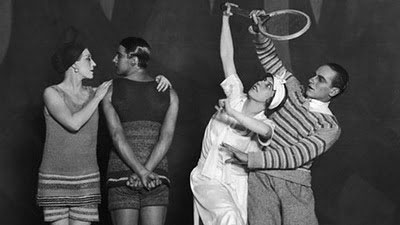
The Ballet Russes production of Le Blue Train in the 20s brought together some of the greatest innovators of the modernist movement. Created by Diaghilev, written by Jean Cocteau, costumes designed by Chanel and scenery painted by Picasso, the scenario was a mock of the rich English tourists that flocked to the Cote d’ Azure, and the ballet recreated snapshots of Rivera beach life during the 1920s, which was very stylised and heavily art inspired.

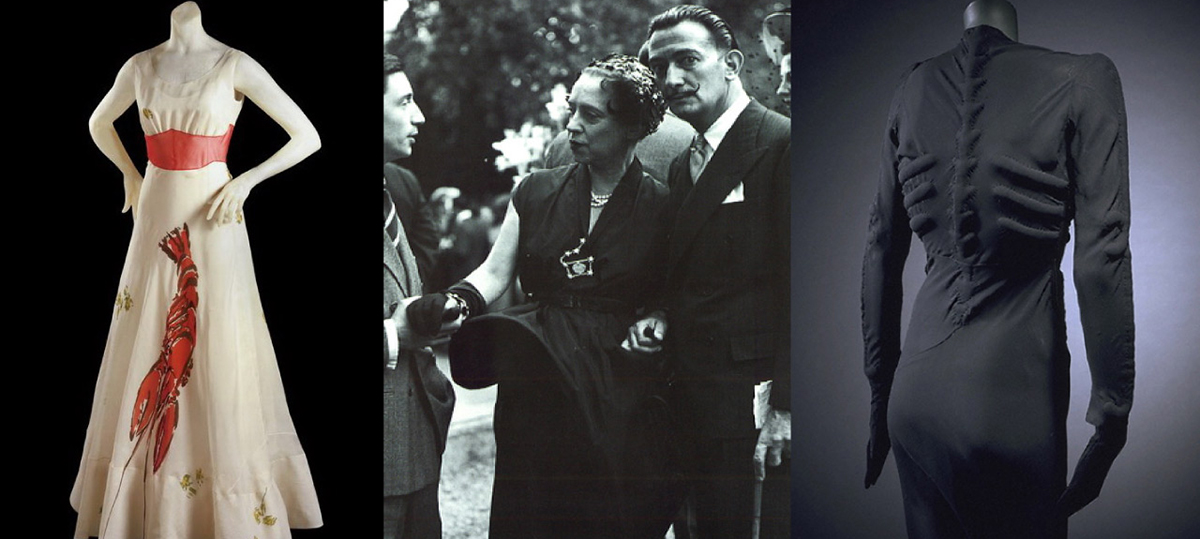
Elsa Schiaparelli’s 1938 collection was in collaboration with Salvador Dali and caused a scandal with a “skeleton” dress that had padded bones integrated into the dress. Her famous lobster dress and shoe hat were also inspired by the artist, with her designs and his art forming part of the Surrealist Exhibition in Paris 1938.
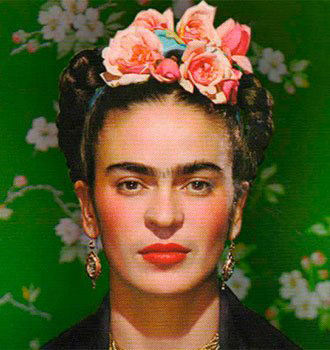
One of the most prolific artists to combine art and fashion was Frida Kahlo, whose self portraits incorporating the flower garlands and bold colours of her native Mexico have led to her becoming a style icon with Rockabilly girls especially, wearing floral creations and bright 50s style dresses and skirts with a Mexican flavour. Designers today still draw on her unique style.
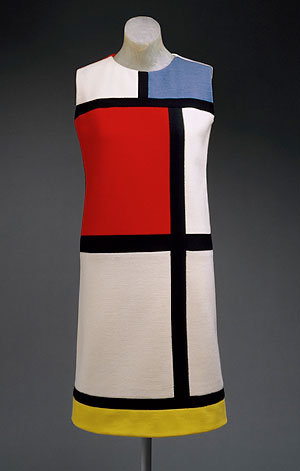
Yves Saint Laurent took the graphic prints of Piet Mondrian, who was in the fore front of the De Stjil movement, his minimalist paintings of primary colours interspersed with black lines, and created wool and jersey shift dresses that became the “look” of the Autumn/Winter season of 1965 and were featured in the front cover of the September issue of Vogue.
Another collaboration of the 60s was Celia Birtwell with her husband Ossie Clark. She designed fabric in soft floral textiles with a definite nod to previous designs of the 1930s, and with Ossie’s genius for cutting they produced haute couture for the decade.
She in turn became the muse of David Hockney who featured her in many of his paintings including Mr and Mrs Clark and Percy, one of his most celebrated works, and one of the most viewed exhibits in the Tate Modern.
Moving into modern times, Marc Jacobs had collaborated with Stephen Spouse, Takashi Murakami and Yayoi Kurakami, using their art on classic Louis Vuitton bags.
Season after season we see designers take influences from works of art and cultures across the globe. The V&A and other museums regularly showcase fashion photography and works by designers past and present as part of their exhibitions. Fashion and art have enjoyed a long association and will no doubt continue its collaboration for many years to come.