
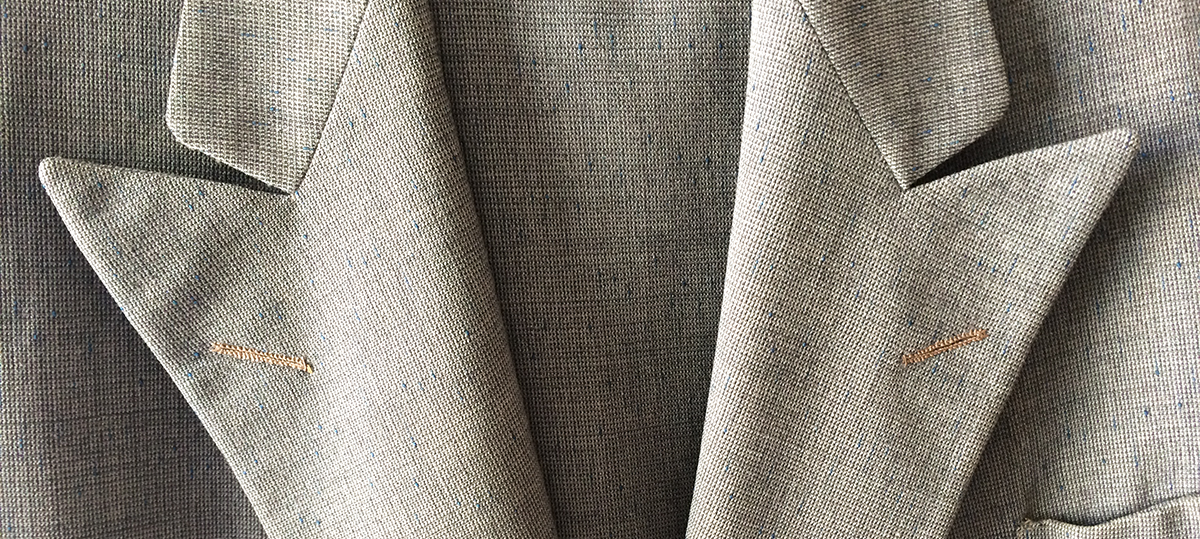


In search of the perfect vintage suit
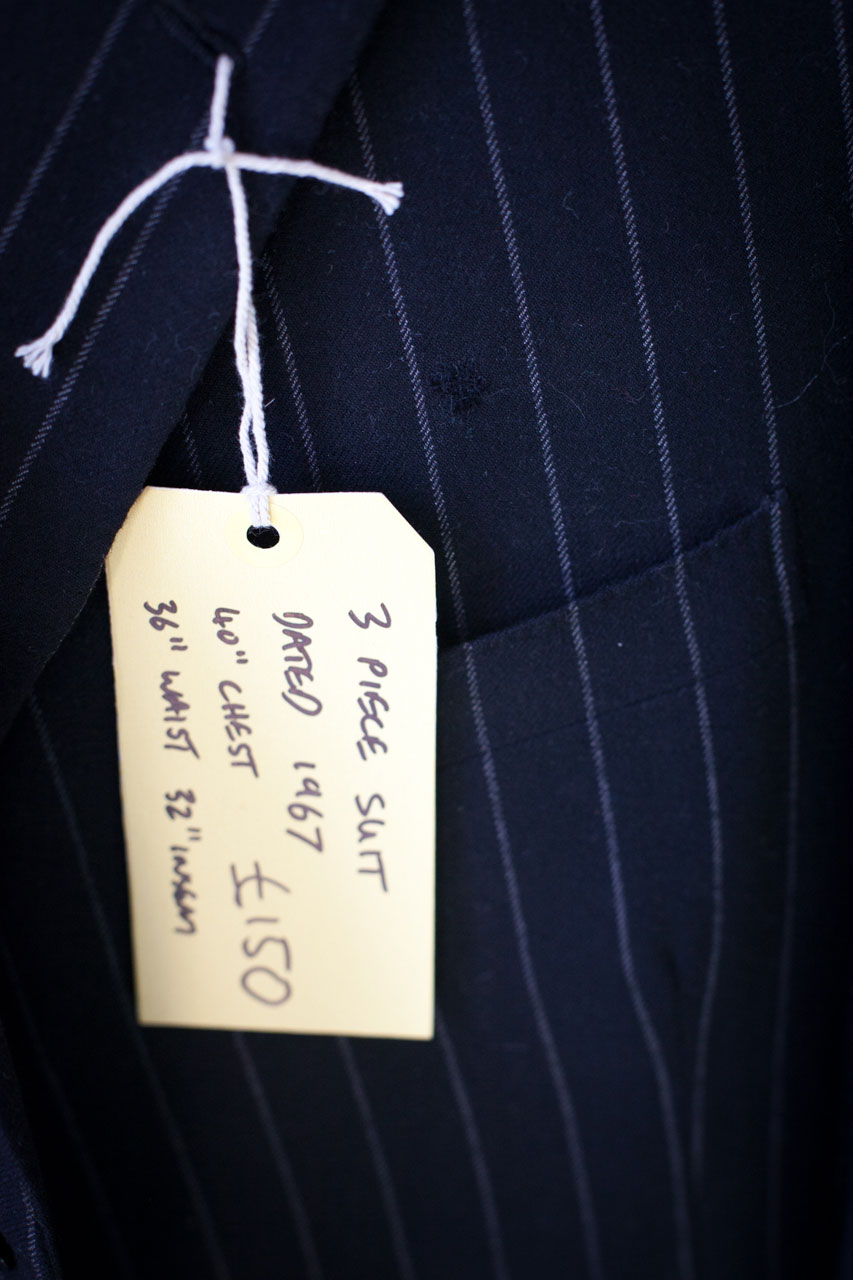 One of the things that I seem to always waste my time moaning and lamenting over is vintage sellers clear lack of either not knowing or not caring about the specifics of the items they sell.
Whilst this may be doing many sellers a disservice, and I do appreciate that not everyone can be an expert on the specifics of 30s or 40s shirt styles for example, a little bit of time examining a piece can unleash a torrent of detail. Even if it means nothing to the viewer, it could mean the world to a potential buyer, the very least of this is measurement!
Okay, let me rewind for a second here and put my tirade into context. I’ve been dressing like it’s the 1930s and 40s every day of my life for roughly five years now (and before that in a retro style since 2001) and the one dream item of clothing that I’ve been looking for in that time is the perfect suit.
This is no mean feat! I’m not the smallest of people, 6′ 3″ tall with disproportionately long legs and a 42″ chest, so as you can imagine there aren’t that many suits out there that fit me, let alone a rare item like a 70+ year old woollen suit, most of which, like a lot of menswear, were worn until they fell off the wearer.
So the perfect suit has become, for me, a little like Moby Dick: Many a sighting, sometimes even a lucky harpoon strike, but never one that sticks and I’ve never landed it…well, almost never (for this tale has some resolve).
Over the length of my search the biggest obstacle has always been information…or lack of, obviously. I can’t tell you how many times that white whale has appeared before me on an eBay listing with not so much as a ‘small’, ‘medium’, or ‘large’ detailed on it. Usually a swift email asking them to measure the thing dismisses my excitement and I return to the suit-less state I started out in.
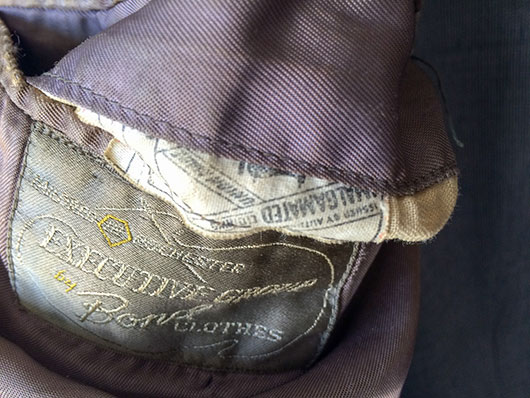
More often than not a suit comes up, in the exact style and age and with a little more detail attached, allowing me to discover that although the jacket fits, the trousers are too wide or too short. Of course in these cases, once again, I end up having to ask if there is any fabric inside the hem to let them down. This often ends with me watching, waiting and debating whether it’s worth placing a bid just to get the jacket, only to see the price skyrocket out of range for a jacket alone.
This brings me to last month. Once again a listing appeared that seemed to fit the description, and once again there was scant detail on the item, only some badly taken pictures, a description of “1940s double breasted suit Demob True Vintage” (don’t get me started on that particular ‘tag’) and “details to follow”. After a few days of waiting and occasionally looking at the listing to see if the details had been added, I got impatient and emailed the seller. Again only a few details came back but enough for me to realise that the suit would fit!
Excitedly I placed a starting bid and waited, as I inevitably got outbid until the final few minutes when I pipped the other bidder to the post and won the suit. I waited with baited breath for nearly two weeks until the suit arrived in the mail. Quickly running into the toilets at work, I stripped and tried it on: it fit! Not perfectly, but within margins that can be adjusted by a tailor.
So home the suit came with me and due to family life it took me a couple of days until the weekend came to examine the suit in all it’s glory. Sadly this is where the story falls apart once more. Trying on the trousers again I realised that they didn’t have the correct shape for true 1940s trousers, they tapered all the way down (30s and 40s trousers taper to around the knee and then go straight), as the disappointment started to mount I tried on the jacket again. This too wasn’t the right shape, its drape is too long and it doesn’t draw towards the centre of the chest and out again.
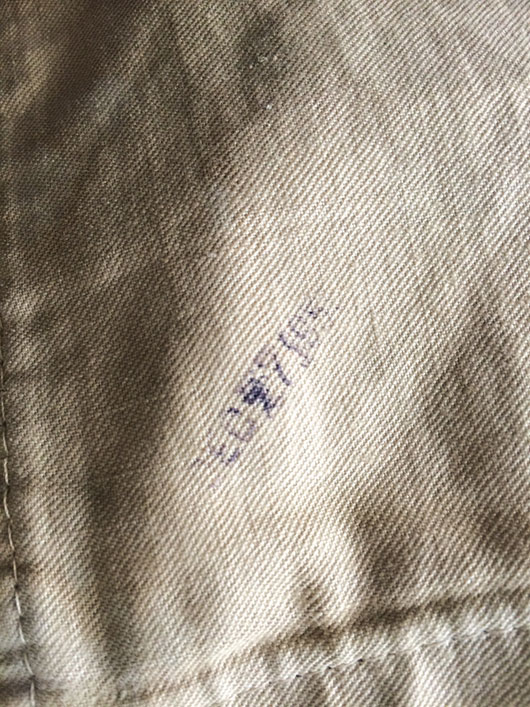
Despondently I removed the suit and sat looking at it. Then I picked up the trousers for a quick search of a label or tag, low and behold on the rear of the pocket flap there was the evidence: a date stamp. The date? 27th December 1955.
Yes, an original suit granted, but a mid-50s suit with a 40s style lapel. Once more Moby Dick sails off into the distance.
Now, I did promise you a happy ending, and here is a little tale of why sometimes, just sometimes, lack of information means a truly show-stopping win. At the same time as I found the non-40s 1955 suit, I happened across an international listing for another item, a jacket described as “40s 50s navy blue double breasted suit jacket 42” with no bids, a mere 14 minutes to go until the end of the listing and a start price of $19.99. The listing at least had detailed measurements and from the badly taken selection of photos I could tell that the jacket was the correct 40s style.
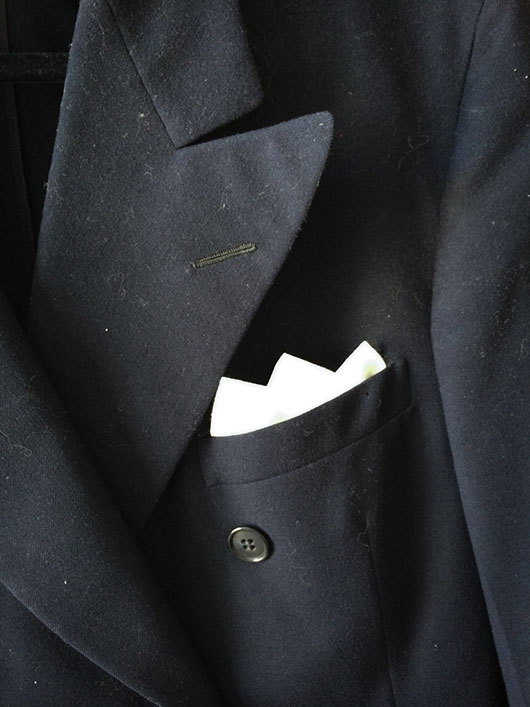
I placed a bid and waited the 14 minutes until the listing ended. Now I had to sit tight until the jacket shipped across the Atlantic to me to see what the hell I’d managed to get for my £11.
Rather surprisingly the jacket arrived on the same day as the suit so after a very quick inspection, the fabric felt good, the lapel was correct and it fit so home it went with me.
So after my disappointment with the suit I picked up the navy jacket and tried it on again, thinking “well, at least I have this little bargain”…and that’s when I looked inside the pocket.
Now what the seller hadn’t realised, or hadn’t bothered to detail on the listing, or to take a photograph of even was that this jacket had a ‘Union Made’ label. The label placed the jacket at sometime between 1939 and 1948.
A “true” 1940s suit jacket. Now if can match the fabric somehow I can use that 1940s trouser pattern I have to get a pair of trousers to match and I’ve got my suit!
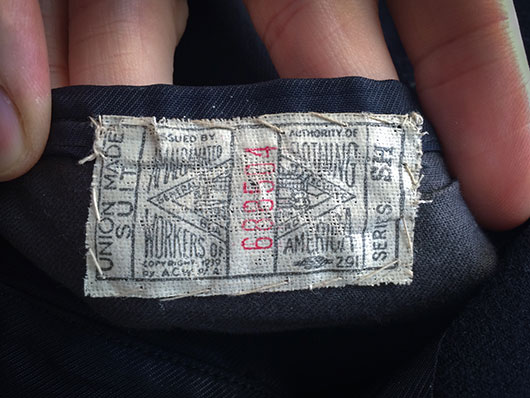
So, vintage sellers take note: the more details you can find out about an item the more likely that item is to sell and the more likely you will get a decent price for it. If you don’t, you won’t know what you have on your hands!
But don’t get greedy now…
